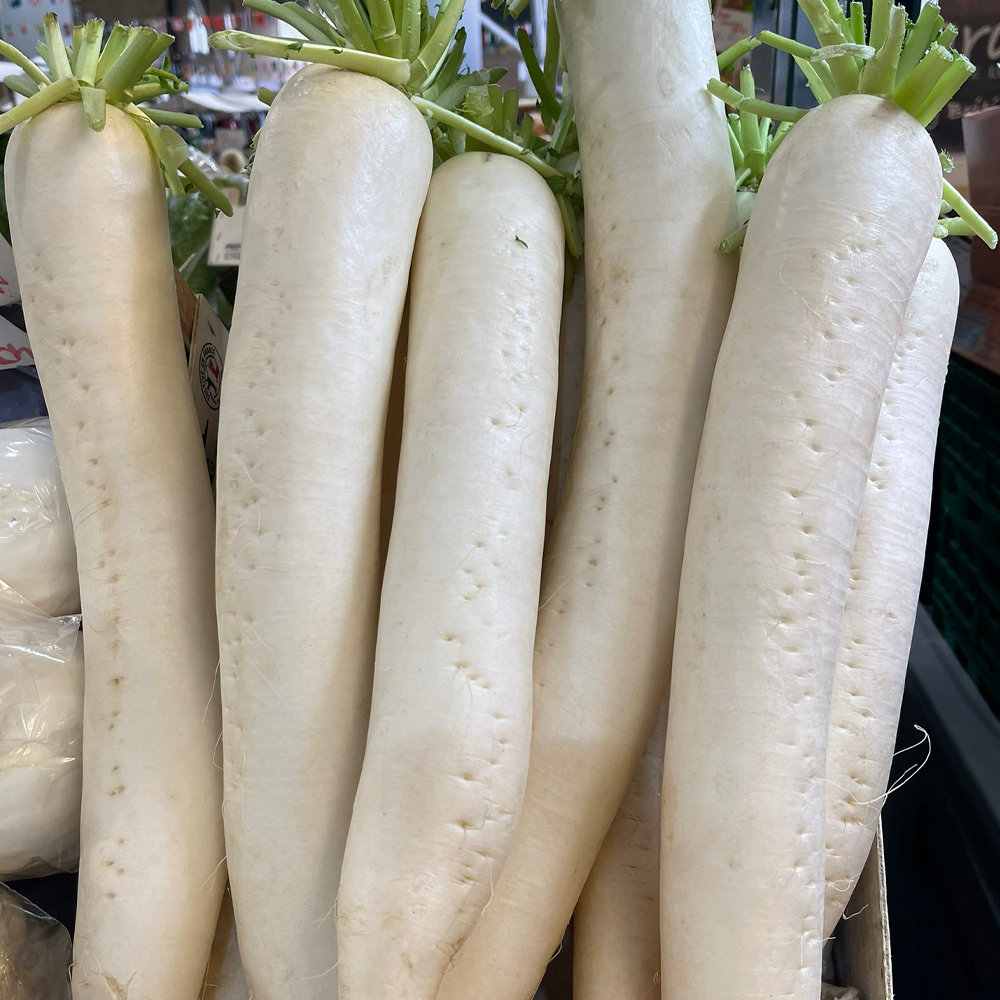
🥕 Daikon Radish – Mild, Crisp & Refreshingly Versatile
🌿 Description
Fresh daikon radish is a large, elongated root vegetable with smooth white skin, crisp flesh and a mild, slightly sweet flavour. Also known as Japanese radish, Oriental radish or mooli, it is widely used throughout Japanese, Chinese, Korean and other Asian cuisines.
Daikon can be grated, sliced, julienned or cut into chunks and enjoyed either raw or cooked. Its refreshing crunch is excellent in salads, slaws and pickles, while cooking gives it a softer texture and a delicate flavour that absorbs sauces and seasonings beautifully.
It pairs particularly well with soy sauce, sesame, ginger, garlic, chilli and rice vinegar, making it a wonderfully versatile ingredient for fresh and comforting dishes. 🥗🍜
💚 Health Benefits of Fresh Daikon Radish
Daikon is a hydrating, low-calorie vegetable that provides fibre, vitamin C and other naturally occurring nutrients.
💪 Supports Normal Immune Function
Daikon provides vitamin C, which contributes to the normal function of the immune system and helps protect cells from oxidative stress.
🌾 Supports Healthy Digestion
Its dietary fibre helps support normal digestion and contributes to a healthy, balanced diet.
💧 Naturally Hydrating
Daikon has a high water content, making it a refreshing vegetable for salads, slaws and other fresh dishes.
🛡️ Contains Natural Plant Compounds
Like other cruciferous vegetables, daikon contains naturally occurring antioxidants and plant compounds.
⚖️ Naturally Low in Calories and Fat
Daikon adds volume, texture and flavour to meals while remaining naturally low in calories and fat.
📊 Daikon Radish Nutrition
Approximate nutritional values per 100g of raw daikon:
- Energy: 18 kcal
- Carbohydrates: 4.1g
- Fibre: 1.6g
- Protein: 0.6g
- Fat: 0.1g
Nutritional values are approximate and may vary depending on the variety, size and growing conditions.
🔪 How to Prepare Daikon Radish
- Rinse the daikon thoroughly under cold running water.
- Trim away the top and root end.
- Remove the skin with a vegetable peeler if it is thick or tough. Young daikon may only require a thorough scrub.
- Slice, dice, grate or cut it into thin matchsticks according to your recipe.
- Serve it raw or add it to cooked dishes.
🍽️ Delicious Ways to Use It
- Grate into fresh salads and slaws
- Make quick refrigerator pickles
- Add to stir-fries and noodle dishes
- Simmer in soups, broths and stews
- Braise with ginger and soy sauce
- Roast with herbs and seasonings
- Serve with sushi, rice bowls and sandwiches
🥢 Quick Pickled Daikon Recipe
These tangy, crunchy refrigerator pickles make a refreshing accompaniment to salads, sushi, sandwiches, rice bowls and noodle dishes.
🛒 Ingredients
- 1 medium daikon radish, peeled
- 240ml rice vinegar
- 50g sugar
- 60ml water
- 1 teaspoon salt
- ½ teaspoon crushed chilli flakes (optional)
- 2 thin slices fresh ginger (optional)
👩🍳 Method
- Cut the prepared daikon into thin rounds or matchsticks.
- Place the vinegar, sugar, water, salt and ginger in a small saucepan.
- Warm gently, stirring until the sugar and salt have completely dissolved. Remove from the heat.
- Allow the pickling liquid to cool.
- Place the daikon and chilli flakes, if using, in a clean jar or airtight container.
- Pour over the cooled liquid, ensuring the daikon remains submerged.
- Seal and refrigerate for at least 4–6 hours, preferably overnight.
- Keep refrigerated and use within approximately one week. Always use a clean utensil when serving.
This is a quick refrigerator pickle and has not been processed for storage at room temperature.
🍲 Chinese-Style Braised Daikon
Slowly braised daikon becomes wonderfully tender and absorbs the savoury flavours of ginger, garlic and soy sauce.
🛒 Ingredients
- 1 medium daikon radish, peeled and cut into thick pieces
- 2 tablespoons vegetable oil
- 2 garlic cloves, finely chopped
- 1 tablespoon sliced fresh ginger
- 1 tablespoon soy sauce
- 1 tablespoon oyster sauce or vegetarian mushroom sauce
- 1 teaspoon sugar
- 120ml vegetable or chicken stock
- 1 tablespoon rice vinegar
- ¼ teaspoon white pepper (optional)
- Sliced spring onions, to garnish
👩🍳 Method
- Heat the vegetable oil in a large frying pan or wok over a medium heat.
- Add the garlic and ginger and cook for 1–2 minutes, stirring regularly.
- Add the daikon and cook for 3–4 minutes, turning the pieces to coat them in the aromatic oil.
- Stir in the soy sauce, oyster or mushroom sauce, sugar and stock.
- Bring to a gentle simmer, then reduce the heat and cover the pan.
- Cook for 20–30 minutes, stirring occasionally, until the daikon is tender.
- Add a little extra stock or water if the pan becomes too dry.
- Stir in the rice vinegar and white pepper.
- Garnish with sliced spring onions and serve with steamed rice.
❓ Frequently Asked Questions
What does daikon radish taste like?
Daikon has a fresh, mild and slightly sweet flavour with a crisp texture. It is generally less peppery than small red radishes.
Can daikon be eaten raw?
Yes. Raw daikon can be grated or thinly sliced and added to salads, slaws, sandwiches, sushi and rice bowls.
Do I need to peel daikon?
Young daikon with tender skin can simply be scrubbed thoroughly. Larger or older roots may have tougher skin that is best removed with a vegetable peeler.
What is another name for daikon?
Daikon is also commonly called Japanese radish, Oriental radish, white radish or mooli.
What happens to daikon when it is cooked?
Cooking softens its crunchy texture and mellows its flavour. It also absorbs the flavours of stocks, sauces, herbs and seasonings particularly well.
How should I store fresh daikon?
Remove any leafy tops and keep the unwashed root in the vegetable drawer of your refrigerator. For best quality, place it in a perforated or loosely closed bag and use it while firm and fresh.

Reviews
There are no reviews yet.